

Morocco Top Trips · Updated 30 October 2026
Morocco is a superb hiking destination and still surprisingly quiet. You can walk between Berber villages in the High Atlas, climb North Africa’s highest peak, follow green trails in the Rif or cross the dunes of the Sahara, often without seeing another group all day.
This guide covers the main hiking regions, the best seasons, what to pack and why a local guide is worth it. If you only have time for one area, the High Atlas near Marrakech is the easiest place to start.
The High Atlas
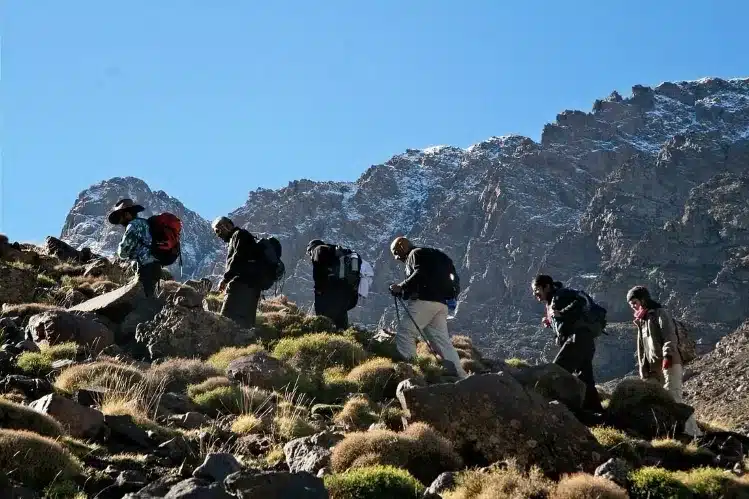
The High Atlas runs across central Morocco and is the heart of Moroccan hiking. Its highest point, Mount Toubkal, reaches 4,167 meters, the highest summit in North Africa. Most walks start from Imlil, a mountain village about 90 minutes from Marrakech.
- Day walks from Imlil: easy to moderate paths through walnut groves and terraced fields to nearby villages and passes. Perfect if you only have one day.
- Mount Toubkal: usually climbed in two days, with a night at the mountain refuge at about 3,200 meters. You need good fitness, but no technical climbing outside winter. Read our Toubkal climbing guide.
- Village-to-village treks: two to five days through valleys such as Azzaden, sleeping in simple guesthouses with Berber families.
- Ait Bouguemez and M’Goun: further east, the “Happy Valley” of Ait Bouguemez is green and peaceful, and the starting point for treks around the M’Goun massif, Morocco’s second-highest mountain.

For shorter routes and ideas, see our guide to five hikes in the High Atlas.
The Rif Mountains

In the north, the Rif is greener, with cedar and fir forests, rivers and limestone gorges. The best base is Chefchaouen. From there, the Akchour trails lead to waterfalls and God’s Bridge, and multi-day routes cross Talassemtane National Park. The Rif sees far fewer hikers than the Atlas. See our Chefchaouen guide.
Jebel Saghro and the Anti-Atlas
South of the High Atlas, Jebel Saghro is a rugged, volcanic range of canyons and rock towers, best for trekking in winter when the high mountains are snowy. Further southwest, the Anti-Atlas around Tafraoute has pink granite boulders, palm-filled valleys such as the Ameln Valley and almond trees that blossom in February.
Desert walks

Walking in the Sahara is a completely different experience: soft sand, total silence and huge skies. Short walks around the Erg Chebbi dunes at Merzouga are easy to add to any desert trip. For a wilder trek, Erg Chigaga, reached from M’Hamid, is more remote, and multi-day walks there are supported by camels carrying the luggage. Desert walking is best from October to April.
The coast and the valleys
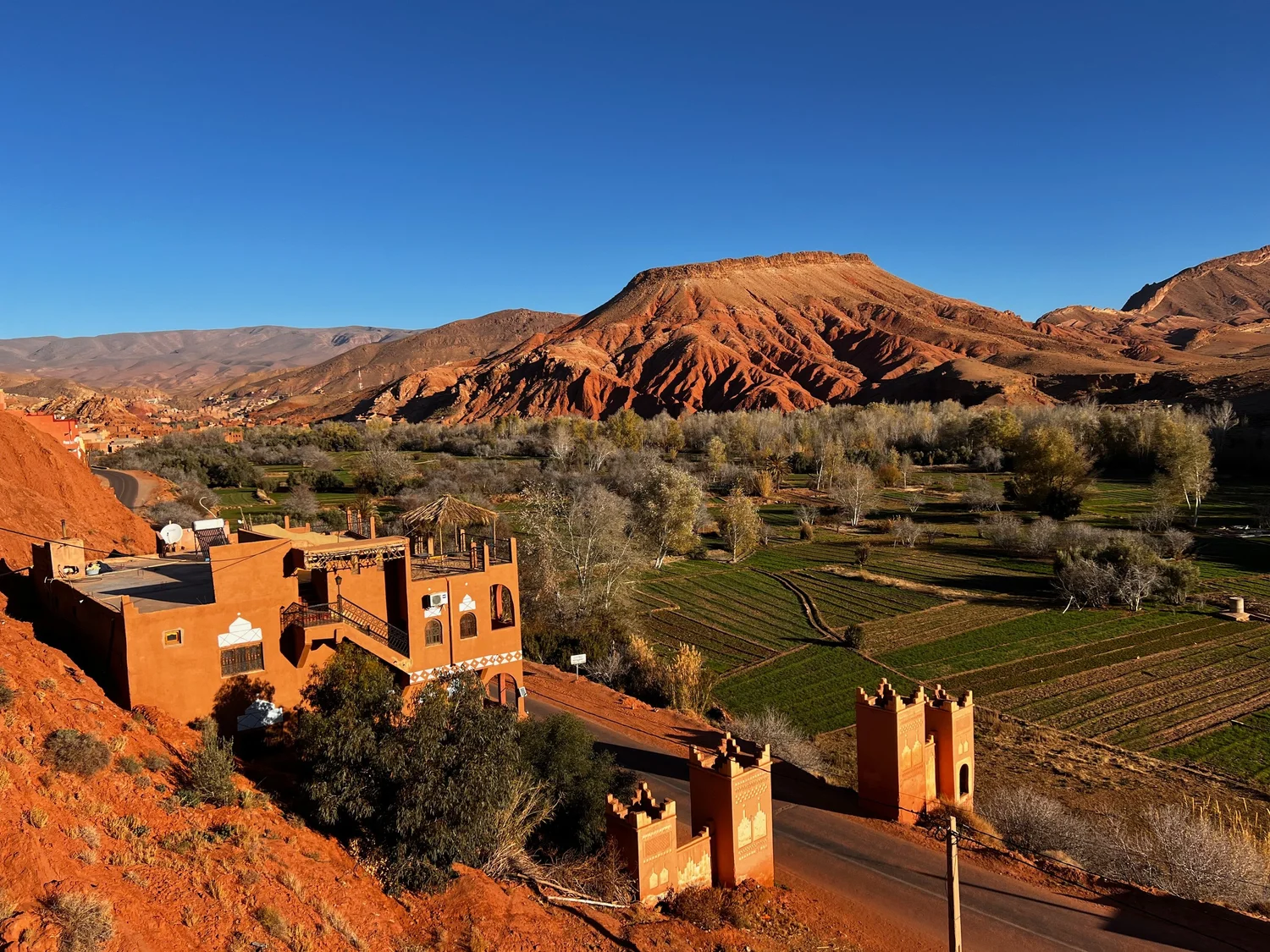
Gentler options include walks in the Dades Valley and Todra Gorge, which are easy to fit into a desert road trip, and coastal paths south of Essaouira, which pass small fishing villages and wild beaches.
When to go
- High Atlas: April to June and September to October are ideal. Summer is fine at altitude but hot in the valleys. In winter, Toubkal is covered in snow and needs crampons, an ice axe and an experienced guide.
- Rif: spring and autumn, when the hills are green and the rivers are flowing.
- Jebel Saghro, the Anti-Atlas and the desert: October to April. Avoid summer, when temperatures are extreme.
Why hike with a local guide
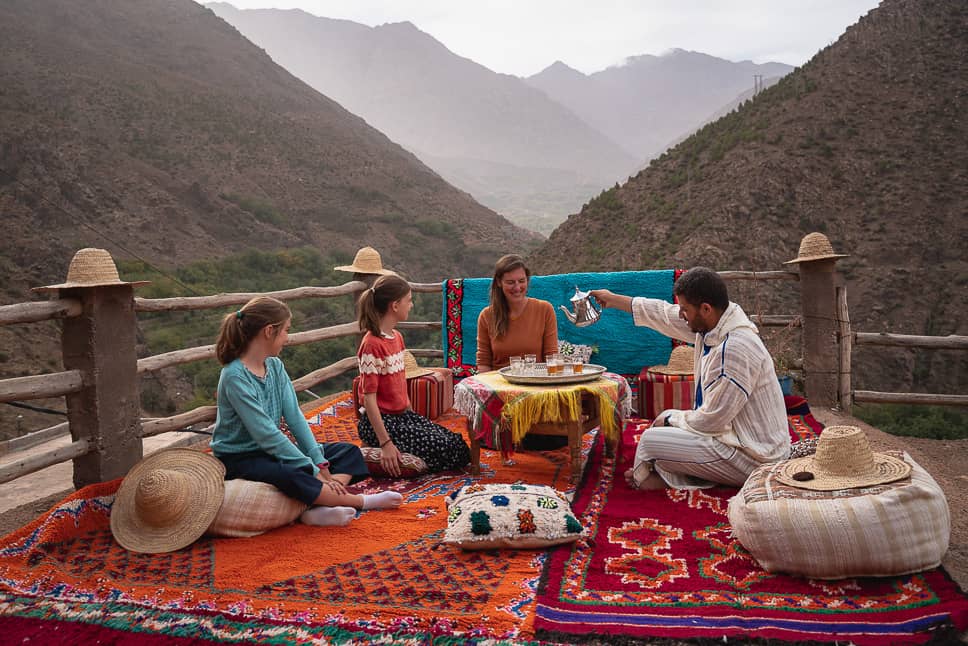
A licensed mountain guide knows the trails, the weather and the villages, and can arrange mules to carry luggage, meals and nights in local homes. Paths aren’t always marked, conditions change quickly at altitude, and several official travel advisories recommend against hiking alone in remote areas. Just as importantly, walking with a guide from the mountains turns a hike into a real cultural experience: you’ll be invited for tea, learn about village life and understand much more of what you see.
What to pack
- Broken-in hiking boots or sturdy trail shoes.
- Layers: a warm fleece and a windproof jacket, even in summer. Mountain nights are cold.
- Sun protection: hat, sunglasses and high-factor sunscreen.
- A refillable water bottle and purification tablets or a filter.
- A small first-aid kit, a headlamp and some cash for village guesthouses.
- Modest clothing for walking through villages.
Hiking responsibly
- Stay on the paths and avoid trampling terraced fields, which are people’s livelihoods.
- Carry your rubbish out with you, and avoid plastic bottles where you can.
- Ask before photographing people, especially women and children.
- Buy food and crafts locally, and stay in village guesthouses, so your money supports the communities you walk through.
- Respect local customs: dress modestly and be discreet during Ramadan.
Frequently asked questions
Do I need to be very fit to hike in Morocco?
No. There are easy day walks for every level. Toubkal and multi-day treks need good fitness and some experience walking at altitude.
Can I hike in Morocco without a guide?
Popular day walks near Imlil are possible on your own, but for Toubkal, multi-day treks and remote areas, a licensed guide is strongly recommended for safety and route-finding.
Can I combine hiking with a tour?
Yes. A day or two in the Atlas fits easily into a Marrakech or desert itinerary. Our 12-day private tour from Marrakech includes a guided walk in Imlil.
Plan your hike
Tell us what kind of walking you enjoy and how many days you have, and we’ll arrange a private route with a licensed mountain guide, comfortable stays and transfers. Get in touch, or read about the best places to stay in the Atlas Mountains.


